

Buying
Buying a building or a business.
Whether you want to own the building your business runs from, buy your first investment property or buy a business, I help you find the right one, check the numbers and get it closed. Most purchases take 30 to 60 days of conditions, then 30 to 90 days to complete.
Search
Where should we start?
See the full list
Buying
- I want to buy a building
- I want to own the space my business uses
- I want to buy the building I lease
- I want my first investment property
- I want to add to my portfolio
- I want to buy a business
- I want to buy with partners
- I want to defer tax when I buy and sell
- I want to buy a distressed property
- I want to buy a building with the owner staying on as tenant
- I want to buy an RV park or campground
Start here
What are you looking to buy?
Each page covers the options, the traps and the first steps.
- 01
I want to buy a building.
Owner-users and investors buying office, retail, industrial or land.
See the plan - 02
I want to own the space my business uses.
When buying your own space makes sense, and what to check before you commit.
See the plan - 03
I want to buy the building I lease.
How to approach your landlord, and what your lease may already say about it.
See the plan - 04
I want my first investment property.
Income, growth and the numbers to check before you write an offer.
See the plan - 05
I want to add to my portfolio.
Finding motivated sellers and properties with room to improve.
See the plan - 06
I want to buy a business.
The real estate side of a business purchase: the lease or the property.
See the plan - 07
I want to buy with partners.
Who owns what, who signs and how you get out, sorted before the offer.
See the plan - 08
I want to defer tax when I buy and sell.
What Canada has instead, and who it helps.
See the plan - 09
I want to buy a distressed property.
Court-ordered sales, receiverships and motivated owners.
See the plan - 10
I want to buy a building with the owner staying on as tenant.
A building with a tenant who already knows it well.
See the plan - 11
I want to buy an RV park or campground.
Land, a business and a lifestyle, all in one purchase.
See the plan - +
A bit of everything
Most leases are a bit of a few of these. Tell me what’s going on and I can help you sort it out.
Give me a shout
By property type
Office, industrial, retail, multifamily or land.
- 01
Buying office property
Strata units, small buildings and owner-user offices.
See the plan - 02
Buying industrial property
Strata units, warehouses, shops and yards.
See the plan - 03
Buying retail and mixed-use property
Street-front shops, strip centres and shops with homes above.
See the plan - 04
Buying multifamily property
Rental apartment buildings, from a few units up.
See the plan - 05
Buying land
Development sites, yards and land to hold.
See the plan - +
A bit of everything
Most leases are a bit of a few of these. Tell me what’s going on and I can help you sort it out.
Give me a shout
Why buyers buy
What do you want the property to do?
Most buyers are after one or two of these. Knowing yours keeps the search focused.
- Income
The property pays you.
Rent coming in every month, with room for that rent to grow over time.
- Growth
It should be worth more later.
A better tenant mix, a renovation, a rezoning or a neighbourhood on the way up.
- Returns
The numbers meet your target.
The return on your cash after financing, and how the property fits alongside what you already own.
- Strategy
It fits a bigger plan.
Owning the building your business uses, adding to a portfolio, or putting money somewhere solid for the long run.
The takeaway: Buyers buy when they see value that matters to them. Work out which of these matters most to you before you start looking.
For buyers
Why do owners sell?
Knowing why a seller is selling tells you who is motivated, and what a deal needs to look like for them to say yes. It almost always comes down to one of these four.
- Problem
Something is forcing a decision.
Debt, management, cash flow, rising expenses or the condition of the property.
- Change
Something in the owner’s life has changed.
An estate, a move, a new portfolio strategy or a change in life circumstances.
- Opportunity
Selling opens a door somewhere else.
Another investment, a need for capital, or repositioning what they own.
- Price
The offer is too good to pass up.
An exceptional price, the chance to turn it into cash, or simply “I can’t pass this up.”
The takeaway: owners sell when their circumstances, priorities or opportunities change.
Buyer representation
What buying commercial property involves
A plain explainer if you’re new to this.
- What it is
Property a business uses or rents out
Commercial property covers retail, office, industrial, multifamily, land and mixed-use buildings. You either use it for your own business or own it for the rent it brings in.
- How it works
Income, expenses and financing
Value mostly comes from net operating income: rent minus the costs the owner pays. Lenders usually want 25 to 50 percent down on commercial property, and most purchases in BC pay property transfer tax.
- The process
Offer, conditions, completion
You make an offer with conditions such as financing, inspection and a review of leases and documents. You remove conditions once you’re satisfied, then the deal completes and title transfers.
- What I check
The real numbers and the building
I check actual rents and expenses, every lease, the zoning, the title and the building’s condition, so you know what you’re buying before conditions come off.
Tool
Check a cap rate
Divide the yearly net operating income by the price. Use real rents and real expenses, and compare against similar sales. The cap rate guide explains more.
Cap rate and value check
A rough number to compare properties. Illustrative only.
Cap rate: 5.00%
Learn
Guides and checklists
Plain-language explainers with BC examples. Read them before you sign anything.
- Guide
Due diligence checklist for buying commercial property
What to ask for and check during the conditional period on a BC commercial purchase, in one list.
Read more - Guide
Financing a commercial property
Commercial lenders look at the property’s income as well as at you. Knowing what they check helps you write an offer with realistic conditions.
Read more - Guide
Cap rates, explained like a savings account
If you bought a building with cash, the cap rate is the interest rate it would pay you. It’s the simplest number in commercial real estate, and one…
Read more - Guide
Property Transfer Tax and share sales, in plain words
Property Transfer Tax is one of the biggest closing costs on a BC commercial purchase, and it’s a big reason some deals are done as share sales.
Read more
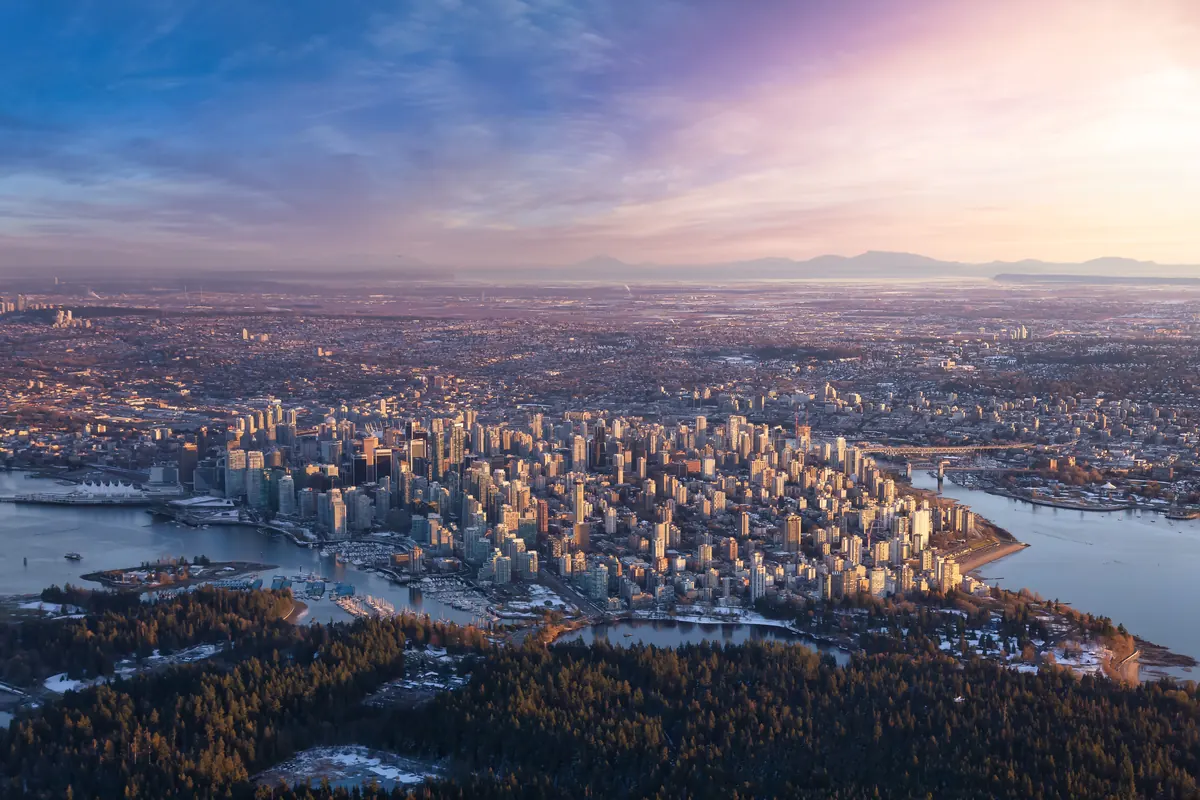
Buying across Metro Vancouver and the North Shore: Downtown, Gastown, Mount Pleasant, Broadway, North Shore, Burnaby and Richmond.
Quick answers
Questions people ask me
Short answers to the things I get asked most. If yours isn’t here, give me a shout.
Can you find properties that aren’t listed?
Sometimes. I research ownership and approach owners who may sell but haven’t listed. Nothing is guaranteed, and I can give you an honest read on what is realistic in your price range.
Who do you represent when I buy?
You, in writing. Before we start you get a BC disclosure form that sets out who I represent. If a property is listed by someone at my brokerage, I’ll tell you before anything happens.
How is a buyer’s agent paid on a commercial purchase?
Often the seller pays a fee that is shared with the buyer’s brokerage. When that isn’t the case, we agree on the fee in writing, through Coldwell Banker Prestige Realty, before I start.
How much do I need down to buy commercial property?
Lenders usually want more down on commercial property than on a home, and it depends on the property, the tenants and your finances. Talk to a commercial lender or mortgage broker early. The financing guide explains what they look at.
What should I gather, ask and watch for?
Documents to gather
- Proof of down payment and a lender pre-approval
- What you want the property to do: use it, earn income, or both
- Your corporate structure, decided with your accountant
- A rough budget for closing costs: PTT, GST, legal, reports
Questions to ask
- What’s the rent roll and the real NOI, not the pro forma?
- Are there environmental reports, and how old are they?
- What does the zoning allow now and in the future?
- Is it a share sale or a property sale?
Common mistakes
- Trusting the listing numbers without the leases and statements
- Skipping the environmental review on older property
- Too short a condition period for financing and reports
- Forgetting GST and PTT in the budget
Typical timeline
- Before offersFinancing and structure in place
- Offer to acceptanceDays to a couple of weeks
- Condition periodTypically 30 to 60 days
- CompletionOften 30 to 90 days after conditions come off
Typical ranges. Your lease, lender and the City set the real dates.
Go deeper
If you’re looking for more details
The buying process, start to finish
- What you want and why. Owner-occupier, investor or both. Budget, down payment and timing.
- Financing first. Talk to a lender early. Commercial loans often need a bigger down payment than homes.
- The search, listed and off-market.
- The offer, with conditions for financing, due diligence and anything specific to the property.
- Due diligence. Documents, inspections, environmental, zoning.
- Subject removal, then completion.
Costs on top of the price
- Property Transfer Tax
- GST on some commercial purchases. Registrants may self-assess. Ask your accountant.
- Legal fees
- Appraisal, building inspection and environmental reports
- Lender fees
Common mistakes
- Skipping the environmental review on older industrial or commercial land.
- Assuming the current use is allowed under today’s zoning.
- Not reading the existing leases if the building has tenants.
Run the numbers
- BC Property Transfer Tax calculatorProperty transfer tax in BC is 1% on the first $200,000, 2% up to $2 million and 3% above that, plus another 2% on residential value over $3 million.
- Commercial mortgage paymentCommercial lenders usually want a bigger down payment and a shorter amortization than on a home, and they check that the rent covers the payments.
- Cap rate, NOI and valueCap rate is net operating income divided by price.
Next step
Tell me what you’re looking to buy.
Price range, type of property, area and timing. I can tell you what’s realistic and where I’d start.