

Inside the industry
How commissions work, and who pays
This is the question people are most curious about and least likely to ask. Here’s how the money actually moves, without the mystery. On most commercial leases in BC, the landlord pays the commission under the listing agreement, and it’s shared with the tenant’s agent. On sales, the seller usually pays. Everything is set out in writing.

The short version
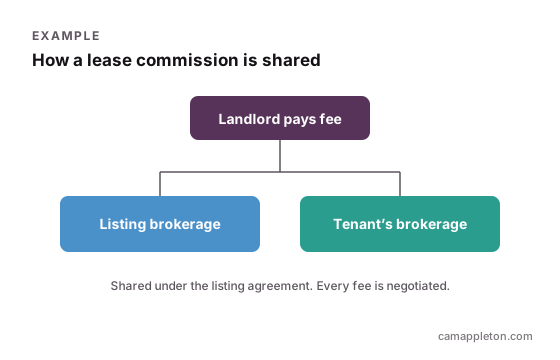
In most commercial leases in BC, the landlord pays the leasing commission. The landlord signs a listing agreement with their brokerage that sets the fee, and that brokerage usually shares part of it with the brokerage that brings the tenant. When I represent you, I’m normally paid from that shared portion.
The details
- There’s no standard rate in BC. Every fee is negotiated and must be set out in writing. Anyone who tells you there’s a “standard” commission is wrong.
- Brokerages get paid, not agents. The fee goes to my brokerage, Coldwell Banker Prestige Realty, which then pays me. BC rules don’t allow agents to take payment directly from anyone else.
- Lease fees are usually based on the rent over the term, and are often paid in parts, for example some at lease signing and some at occupancy.
- Disclosure is required. Before you make an offer, you’re entitled to know in writing what my brokerage expects to receive and from whom.
- If a landlord won’t pay, our tenant agreement sets out the fee, and any amount the landlord pays is credited against it first. We agree on this at the start, in writing, through Coldwell Banker Prestige Realty.
What it costs you
Usually not directly. Leasing fees are a cost of doing business for landlords, the same way their property taxes and insurance are. It’s fair to know that the landlord pays a fee whether you’re represented or not, because the listing agreement covers it either way.
Unrepresented, the listing brokerage often just keeps more of it.
Where it gets awkward
Plenty of agents work both sides of the market, on different deals. If your agent also lists space for landlords, it’s fair to ask which spaces they’ll show you first. On any deal, I’ll tell you in writing who represents whom.
More on that in why I focus on tenants.
Commission and fees are open for discussion with every client, and always in writing. Ask me anything about it on our first call.
Go deeper
If you’re looking for more details
How the money usually moves on a lease
The landlord signs a listing agreement with their brokerage that sets the commission. When a tenant has its own agent, that commission is usually shared between the two brokerages. It’s often worked out from the total rent over the term, so a longer lease means a larger commission.
The details are in writing before any deal.
Your protections
- BC requires your agent to disclose who they represent, in writing, before giving services.
- BC has banned dual agency since June 15, 2018, in nearly all cases.
- Under BC’s Real Estate Services Rules, your agent must tell you in writing about any pay their brokerage gets from someone other than you, such as a landlord or seller, including the source and the amount or how it’s worked out.
Search
Not quite your situation? Search
Next step
Ask me about fees anytime.
Ask me on a 15-minute call. You’ll get a straight answer before we do anything else.