

Guide · Leasing · 2027
Additional rent in 2027: a checklist that catches overcharges
Additional rent (CAM) is often as big a deal as base rent. Here’s how to read the estimate and the year-end reconciliation before you nod along.
For: Tenants on triple net leases · Anyone reviewing a 2027 CAM estimate

General information, not tax or legal advice. Talk to your lawyer and accountant before you act. Numbers here are illustrative, not a quote on any property.
What additional rent actually is
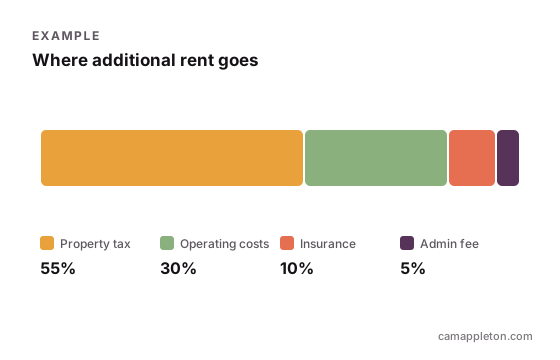
Base rent is only part of the bill. Additional rent (often called CAM, for common area maintenance) is your share of the building’s taxes, insurance and operating costs. On most Metro Vancouver commercial leases, that extra line is real money every month.
A 2027 additional-rent checklist
Use this when your landlord sends the estimate for the coming year, or the reconciliation for the year just ended.
- Get the documents. Monthly estimates, the year-end reconciliation, and the lease clauses that define recoverable costs.
- Check your share. Confirm your proportionate share against the building’s rentable area. A wrong denominator quietly overcharges you every month.
- Split the lines. Taxes, insurance and operating costs behave differently. A tax jump is different from a management fee jump.
- Ask for backup on any line that moved a lot: invoices, contracts, or the tax notice.
- Look for exclusions. Capital repairs, landlord overhead and costs tied to vacant space are often argued. Your lease wording wins.
- Compare to last year. A quiet 8% drift compounds. Two years of statements beat one.
- Watch admin fees. Some leases add a percentage on top of operating costs. Know whether yours does.
- Gross-up clauses. If the building isn’t full, some leases “gross up” operating costs as if it were. Read that clause carefully.
Questions worth asking in writing
- What was actual additional rent for the last two full years, per square foot?
- Which costs are capped, if any?
- How is my proportionate share calculated, and has the denominator changed?
- Are capital projects being passed through as operating costs?
- When do I get the annual reconciliation, and how long do I have to dispute it?
Example only, not a real client. Say your 2026 reconciliation shows insurance up sharply and a new “special project” line. You ask for the insurance renewal and the project invoices. One cost belongs in additional rent under your lease. The other looks like a capital item your lease doesn’t let the landlord recover that way. You send a short written question before the dispute window closes.
What I’d tell a friend
Treat additional rent like a second rent cheque. Read the reconciliation every year, especially heading into 2027 when tax and insurance lines are jumpy. A polite written question beats a shrug.
Related: paying too much rent, additional rent, occupancy cost calculator, hidden costs.
Questions people ask
What is additional rent (CAM) on a BC commercial lease?
Additional rent is what you pay on top of base rent: usually property taxes, building insurance and operating costs (often called CAM, or common area maintenance). On a triple net lease you typically pay a share of all three.
How do I check my 2027 additional rent statement?
Ask for the full year-end reconciliation, not just the monthly estimate. Compare line items to the lease, ask for invoices on big jumps, and check your proportionate share against the building’s rentable area.
Can additional rent go up a lot in one year?
Yes. Taxes, insurance and major repairs can move the number. Your lease decides what can be passed through. Some leases cap controllable operating costs; many do not.
Go deeper
Plain-English definitions with BC sources, from the encyclopedia:
Next step
Want help reading your CAM statement?
Send the last reconciliation and the lease pages that define additional rent. I can flag what looks off.
Search