

Guide · Lease math
Tenant improvements: who builds what, and who pays
Most commercial space needs work before you can move in. The lease decides who does it, who pays, and what happens to it when you leave. Settle it in the offer to lease, because it’s much harder to fix once the lease is signed.

General information, not tax or legal advice. Every deal is different. Talk to your lawyer and accountant before you act on anything here.
Two ways landlords contribute
A work letter lists what the landlord will build or install, often to a building standard: so many doors, outlets, lights and so much partitioning for your area. An allowance is a dollar amount, usually per square foot, that the landlord pays toward work you arrange. An allowance caps the landlord’s cost, so you carry any overrun.
Allowances commonly cover design, permits, construction and floor finishes. Furniture, signage and moveable equipment usually aren’t included. Read the definition in your lease.
Building standard and over-standard work
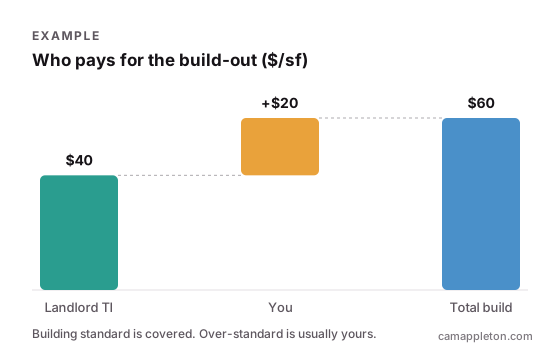
Many landlords price the work letter or allowance to a building standard. Anything better or extra, such as glass walls, a kitchen, extra power or upgraded finishes, is over-standard and usually yours to pay. List what your business actually needs, compare it with what’s offered, and negotiate the gap before you sign.
Second-generation space
Space a previous tenant built out can save you money if the layout suits you. Ask how long the last tenant was there, what you’re allowed to keep, and when a permit was last pulled. Space that hasn’t been touched in years can hide costs.
Permits can trigger code upgrades
When you apply for a permit for your build-out, the city may require parts of the space to be brought up to current code, such as lighting, electrical, accessibility or fire separations. In older buildings that can eat a large part of the allowance. Ask the landlord before you sign who pays for code work, and get the answer in the lease.
How the money flows
Landlords usually pay an allowance as the work is done or once it’s finished, against invoices and lien-free confirmation, not up front. That means you may need to fund the work first. Some landlords will add the cost of extra work to your rent over the term instead. Either way, plan your cash flow around the payment terms in the lease.
An allowance is part of the deal’s value. Fold it into net effective rent when you compare offers.
At the end of the lease
Check the restoration clause. Some leases let the landlord require you to remove your improvements and return the space to its original state at your cost. Agree up front which improvements stay, and get it in writing. I go through all of this with you in the offer to lease.
Questions people ask
Is a bigger allowance always better?
Not on its own. A larger allowance often comes with higher rent or a longer term. Compare offers on total cost over the term.
Can I keep unused allowance money?
Only if the lease says so. Many allowances can only be spent on the improvements, and any unused amount stays with the landlord. Some landlords will apply it to rent; ask during the offer.
Go deeper
If you’re looking for more details
Questions to ask the landlord
- Is the contribution a work letter or a dollar allowance, and what exactly does it cover?
- When and how is the allowance paid?
- Who pays for code upgrades triggered by my permit?
- Which improvements do I have to remove at the end?
- How long is the fixturing period before rent starts?
Run the numbers
Search
Not quite your situation? Search
Next step
Compare two buildings on real cost.
Send me both listings. I can put them side by side on real cost.